
The 57th session of the United Nations Statistical Commission is held in New York.
The Republic of Belarus is represented at the event by the First Deputy Chairperson of the National Statistical Committee of the Republic of Belarus Tsimafei Zhyharau.
As part of the Session’s programme, Tsimafei Zhyharau participates in discussions on a number of key areas of strategic importance for the development of national statistical systems and international cooperation. These include the report of the Expert Group on Well-Being Measurement, Agricultural and Rural Statistics, Environment Statistics and Climate Change, as well as the report of the Working Group on Data Governance.
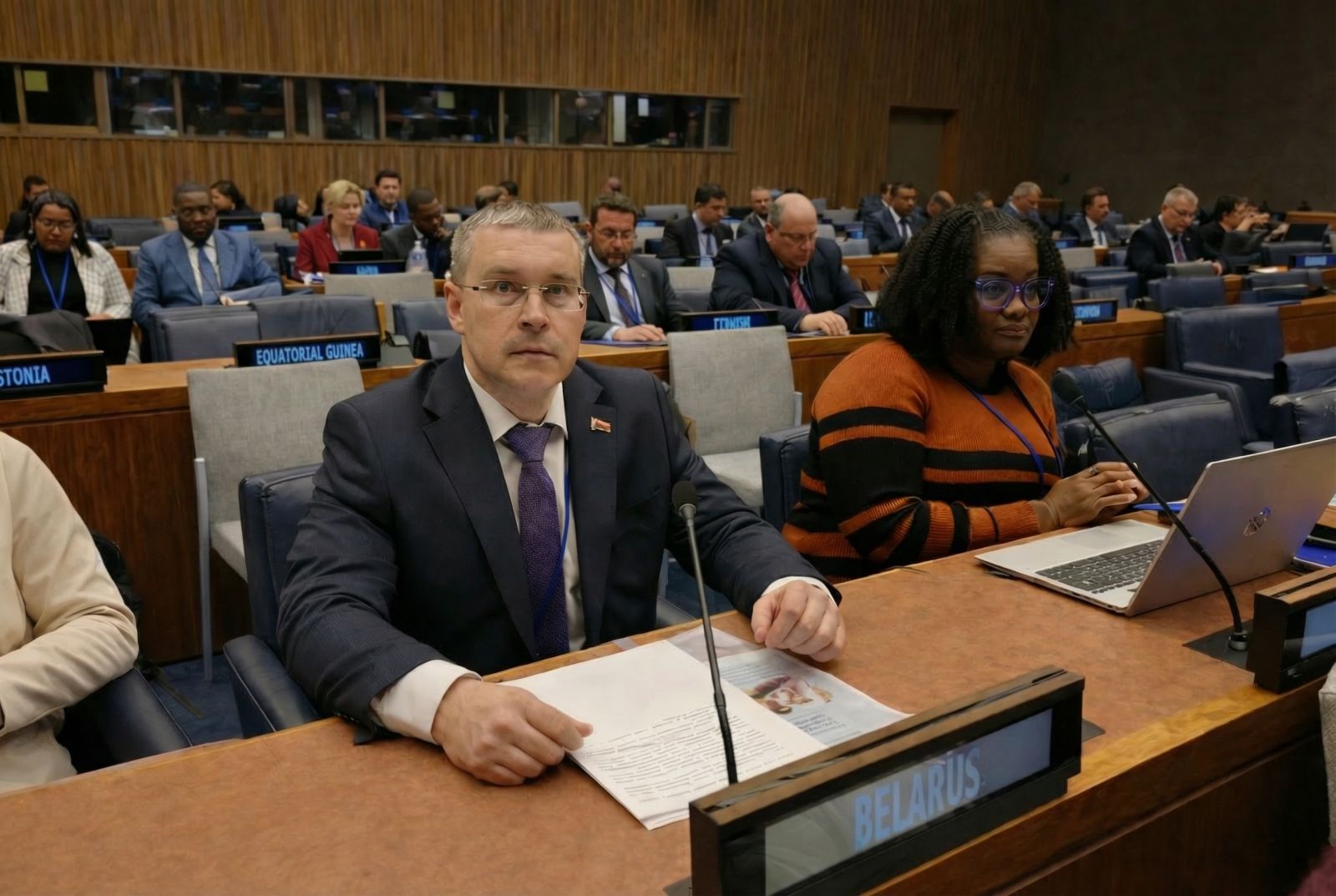
The Session focused on the report for the Expert Group on Well-Being Measurement. In his speech, Tsimafei Zhyharau stressed that work is already underway in Belarus to develop a national system for measuring sustainable well-being. "The development of a national index based on a balanced set of indicators to complement the GDP measure is foreseen," he noted. Belstat thus reaffirms its commitment to monitoring wellbeing by analyzing indicators that expand the traditional framework of GDP.
The international system of measurement of well-being that is being created, in the view of Belarus, will be an important reference point for improving social and economic policies aimed at a real improvement of citizens' standard of living.
As part of the discussion on the "Report on Agricultural and Rural Statistics", Belstat expressed full support for the adoption of the guidelines of the World Programme for the Census of Agriculture 2030. Tsimafei Zhyharau stressed that the concepts and definitions contained in the document would be useful to countries when planning and conducting agricultural censuses, and adherence to the guidelines would ensure international comparability of results.
However, the belarusian side put forward a proposal aimed at optimizing statistical activities. "Countries that have a regular/systematic statistical coverage of 100 % of the activities of agricultural organizations should be given the opportunity to integrate already available data into census results," said Tsimafei Zhyharau. Such integration would eliminate duplication of information requests, reduce respondent burden, financial and labor costs. Belarus counts on the support of this initiative from the UN Statistical Commission and its colleagues.
At the session on "Environment and Climate Change Statistics", Tsimafei Zhyharau noted the significant progress made by Belarus in this area. Based on the guidelines for the implementation of the Global Set of Climate Change Statistics and Indicators, in 2025 Belstat approved and published on its website the National Set of Climate Change-Related Statistical Indicators. "This national set includes 72 indicators, which are aligned with the Framework for the Development of Environment Statistics, the System of Environmental Economic Accounting, the Sustainable Development Goals indicators, and the Paris agreement reporting indicators. However, Belstat supports the initiatives of the UN Statistics Division and the Expert Group to revise the Global Set and the Framework for the Development of Environment Statistics, which will improve the National Set of Climate Change-Related Statistical Indicators, and expand its application”, emphasized Tsimafei Zhyharau.
Within the framework of the "Report of the Working Group on Data Governance", the First Deputy Chairperson of Belstat noted that the Republic of Belarus participated in a global survey on data governance and national statistical system conducted under the auspices of the UN in 2025. The survey results indicate that Belstat is at a sufficiently high level in terms of data governance: "Since last year, Belstat has been involved at the legislative level in state data governance activities. We have developed standard structures for government data, metadata, and classifications, adapted our own software products for maintaining the government data catalog (GDC) and the unified classification system (UCS), began an inventory of data contained in all government information systems and resources. It should be stressed that the framework document on data governance for official statistics, which is being developed by the Group, will only be useful if the specific functions of statistical services in the role of data curators are defined", stated Tsimafei Zhyharau.
For reference: as part of a global survey on data governance and national statistical systems, the Working Group of the UN Statistical Commission gathered information from 108 member states on institutional arrangements, legal and policy frameworks, use of new data sources and technologies, and related challenges in terms of coordination, resources, capacity and international cooperation.
During the 57th Session of the UN Statistical Commission, participants from around the world exchanged experiences, shared best practices and worked together to make decisions on relevant topics over several days.
© National Statistical Committee of the Republic of Belarus. When using information reference to the National Statistical Committee of the Republic of Belarus is mandatory.